The way people consume television content has changed dramatically over the past decade. Traditional cable and satellite TV are steadily being replaced by digital alternatives that offer more flexibility and personalization. Among these modern options, Internet TV and IPTV are two of the most popular choices—but they are often confused with one another.
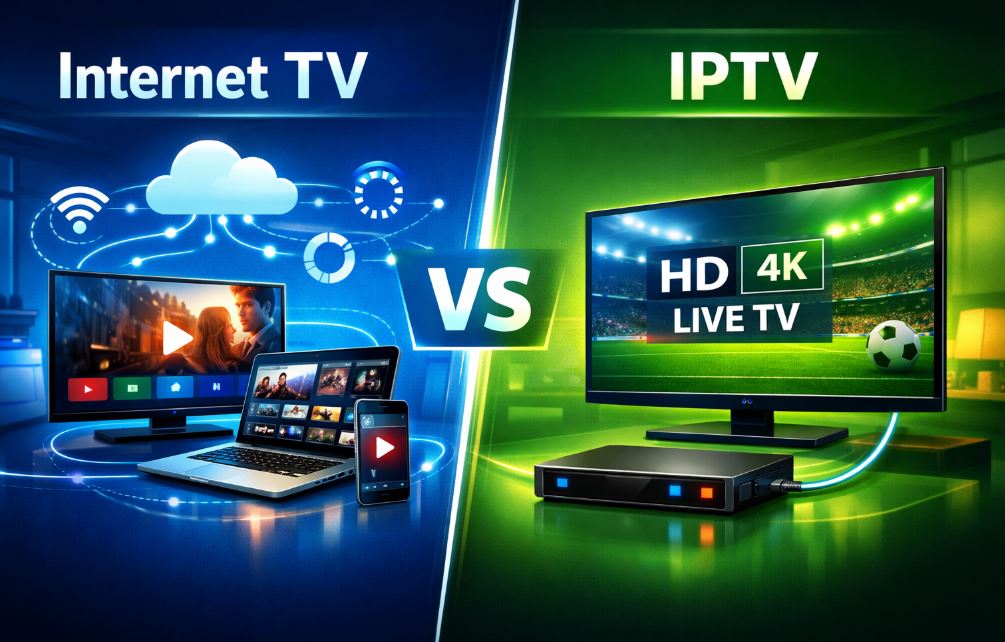
Understanding the Internet TV vs IPTV debate is essential if you want to choose the right entertainment solution for your needs. While both rely on internet technology, they differ significantly in terms of delivery, quality, and user experience.
We will explore the difference between Internet TV and IPTV, along with their advantages, disadvantages, and a detailed comparison chart to help you make an informed decision.
What is Internet TV?
Internet TV refers to television content delivered over the public internet. Unlike traditional broadcasting methods, Internet TV allows users to stream videos directly on their devices without requiring dedicated infrastructure.
How Internet TV Works
Internet TV uses standard broadband connections to deliver content via streaming platforms. Users can watch shows, movies, and live events through apps or web browsers on smartphones, smart TVs, laptops, or tablets.
Key Features of Internet TV
- On-demand access to content anytime
- Compatible with multiple devices
- No need for specialized hardware or installation
- Flexible subscription models (free or paid)
Examples of Internet TV Services
Popular platforms include streaming services like Netflix, YouTube, and Amazon Prime Video.
What is IPTV?
IPTV (Internet Protocol Television) is a system where television services are delivered through a private, managed network rather than the open internet. This controlled environment ensures better performance and reliability.
How IPTV Works
IPTV providers transmit content through a dedicated network, often managed by telecom companies or service providers. This allows for consistent streaming quality and minimal interruptions.
Types of IPTV Services
- Live TV: Real-time broadcasting of channels
- Video on Demand (VOD): Access to a library of content
- Time-Shifted TV: Watch previously aired programs
Key Features of IPTV
- High-quality streaming (HD and 4K)
- Stable and reliable connection
- Advanced features like pause, rewind, and recording
- Subscription-based services
Difference Between Internet TV and IPTV
Understanding the difference between Internet TV and IPTV is crucial for making the right choice. Although both use internet technology, their delivery systems and performance vary significantly.
Core Differences
- Delivery Method:
Internet TV operates over the public internet, while IPTV uses a private, dedicated network. - Streaming Quality:
Internet TV quality may fluctuate depending on bandwidth, whereas IPTV offers consistent quality. - Buffering and Latency:
Buffering is more common in Internet TV, while IPTV minimizes interruptions. - Content Control:
IPTV providers have more control over content delivery, ensuring better reliability. - Infrastructure:
Internet TV requires only a stable internet connection, while IPTV may need specialized setup.
Internet TV Pros and Cons
Advantages of Internet TV
- Accessible from anywhere with an internet connection
- Cost-effective, with many free or affordable options
- Extensive content variety across genres
- Easy setup with no technical installation required
Disadvantages of Internet TV
- Streaming quality depends heavily on internet speed
- Frequent buffering during peak hours
- Inconsistent video resolution
- Limited reliability for live TV streaming
IPTV Pros and Cons
Advantages of IPTV
- High-definition and 4K streaming quality
- Minimal buffering and latency issues
- Reliable live TV broadcasting
- Interactive features like pause, rewind, and recording
Disadvantages of IPTV
- Requires dedicated setup or compatible devices
- Typically more expensive than Internet TV
- Limited availability in certain regions
- Dependence on service providers for maintenance
Internet TV vs IPTV: Comparison Chart
| Feature | Internet TV | IPTV |
|---|---|---|
| Delivery Method | Public Internet | Private Network |
| Streaming Quality | Variable | Consistent |
| Buffering | Common | Minimal |
| Setup | Simple | Moderate |
| Cost | Low to Moderate | Moderate to High |
| Live TV | Limited | Strong |
| Reliability | Internet-dependent | Highly reliable |
Read also more related topics: IPTV VS Streaming TV
Which One is Better for You?
Choosing between Internet TV and IPTV depends on your viewing preferences, budget, and internet infrastructure.
- Choose Internet TV if you:
- Prefer on-demand content
- Want a low-cost or flexible solution
- Use multiple devices frequently
- Choose IPTV if you:
- Watch live TV regularly
- Prioritize high-quality streaming
- Want a cable-like experience with advanced features
Ultimately, the best option depends on how you consume content and what features matter most to you.
Future of Internet TV and IPTV
The future of digital television is promising, with both Internet TV and IPTV continuing to evolve rapidly.
- Faster internet speeds (5G and fiber) will enhance streaming quality
- Increased demand for personalized content will shape services
- Hybrid models combining Internet TV and IPTV features are emerging
- Smart devices and AI-driven recommendations will improve user experience
As technology advances, the gap between these two services may continue to narrow.
FAQs on Internet TV VS IPTV
What is the main difference between Internet TV and IPTV?
The main difference lies in the delivery method—Internet TV uses the public internet, while IPTV operates on a private network for better reliability.
Is IPTV better than Internet TV?
IPTV is generally better for live TV and consistent quality, while Internet TV excels in flexibility and affordability.
Can I use IPTV without internet?
No, IPTV still requires an internet connection, but it uses a managed network for improved performance.
Which is cheaper: Internet TV or IPTV?
Internet TV is usually more affordable, especially with free or low-cost streaming platforms.
Is IPTV legal?
Yes, IPTV is legal when provided by licensed and authorized service providers.
Conclusion on Internet TV vs IPTV
In the debate of Internet TV vs IPTV, there is no one-size-fits-all answer. Each option offers unique benefits tailored to different viewing needs.
Internet TV is ideal for users seeking flexibility, affordability, and a wide range of on-demand content. On the other hand, IPTV provides a more reliable and high-quality experience, especially for live television enthusiasts.
Before making a decision, consider your budget, internet speed, and viewing habits. By understanding the difference between Internet TV and IPTV, you can choose the solution that best fits your lifestyle.